October 15, 2026 · 9 min read
Conference Translation for Organizers: Test Phone Captions and RSI
Compare conference interpreting modes, phone captions, and RSI. Use WCAG and AV checks to prepare your event, and see where Live Caption AI fits.

Your realistic conference translation options are on-site simultaneous interpreting, remote simultaneous interpreting (RSI), consecutive, whispered, AI live captions with translation, and sign-language feeds. The rule is simple: the higher the stakes and the more technical the content, the more you lean on human simultaneous interpreters. Use consecutive or AI captions for breakouts and low-risk sessions. Treat WCAG as your accessibility baseline, then work through the technical checklist below.
TL;DR:
- Simultaneous interpreting requires two interpreters per language, rotating every 15–20 minutes; rare languages and specialized subjects can also raise day rates.
- RSI removes booth, receiver, and shipping costs, but still requires a platform, reliable connectivity, clean audio and video feeds, and language channels.
- AI captions suit casual sessions or backup use, but accents, jargon, and names reduce accuracy; accessibility obligations call for human interpreters or reviewed captions.
- For sensitive sessions, use unique, secure links and encrypted transcripts, then ask vendors whether they retain audio or text after the event.
- Send slides and acronym lists early, brief interpreters on terminology, and rehearse channel switching from attendee devices before the event begins.
Table of Contents
- Which conference translation options can you choose from?
- How does each mode work in practice?
- What drives conference interpreting costs?
- What should your technical and AV checklist include?
- What accessibility and privacy standards should you confirm?
- How do you choose the right option for each session?
- Why do I match the mode to the stakes first?
- Where does Live Caption AI fit in your plan?
- FAQ
- Sources
Which conference translation options can you choose from?
Here is the shortlist, with one-line definitions so you can jump to what matters for your event.
- On-site simultaneous interpreting: Interpreters sit in a booth and translate as the speaker talks. Attendees listen through headsets or receivers.
- Remote simultaneous interpretation (RSI/VRI): Interpreters work from another location. Attendees pick a language channel on a phone, browser or app.
- Consecutive interpreting: The speaker pauses, then the interpreter delivers the message. No booth, but sessions run longer.
- Whispered interpreting: An interpreter speaks quietly to a small group inside a bigger room.
- AI live captions and machine translation: Speech-to-text appears on screens or phones, optionally translated. Many tools let you trade some accuracy and latency for speed and lower cost.
- Sign-language interpreting: Interpreters sign for deaf and hard-of-hearing attendees, usually with a dedicated, well-framed video feed.
How does each mode work in practice?
Simultaneous interpreting needs two interpreters per language. They swap every 15–20 minutes, because the work is mentally exhausting. ITU guidance on virtual interpreting makes the same point, recommending two interpreters who switch every 15–20 minutes. In person, you need a booth or an interpreting hub, a clean audio feed from the podium, and routing to headsets or a stream.
RSI moves the interpreters offsite. Your platform must stream real-time audio and video, support language channels, and let you brief interpreters before the event. Attendees open a link or scan a code and choose their channel. This is a strong fit for hybrid events and for rooms where building booths is impractical.
Consecutive uses an interpreter. You pay for it in time: sessions take longer because the speaker pauses for the interpretation. It works well for small groups and technical briefings where precision matters more than pace.
Whispered interpretation serves a small group of listeners. Fatigue and room noise make it a spot solution, not a plan for a full audience.
AI captions and machine translation run a speech-to-text pipeline, then translate the text. Latency is low, but accuracy drops with accents, jargon and names. Use captions as the primary channel for casual sessions and as a supplement when humans interpret. For vocabulary-heavy rooms, we built Medical, Worship & Ministry and Finance & Earnings models, plus Custom Terms you load before going live.

Sign-language feeds need the interpreter framed clearly and kept visible on screen, separate from the slides and the speaker.
What drives conference interpreting costs?
Start with staffing. The rule of two means every simultaneous language costs two interpreters, so each added language roughly doubles that line item. Rare languages and specialized subjects, such as oncology or securities law, raise day rates further. Book rare languages early to avoid travel premiums and last-minute fees.
Hardware is the second driver. A traditional booth setup adds booths, consoles, headsets and receivers, plus technicians to run them. RSI and software-based delivery strip out most of those line items, though you still pay for the platform and for solid connectivity.
Here is an illustrative comparison, not market data. In a multilingual event, the booth model carries interpreters, equipment rental and on-site technicians. The RSI model carries interpreters and a platform fee, with no booths, no shipping and potentially fewer technicians. The interpreter cost is similar, so the savings come from everything around them.

AI-only platforms usually price by the hour or by package, and hybrid human-plus-AI models land in between. For reference, our own plans are public: Professional is $19.99 per month for unlimited captioning, and translation credit packs are sold separately on the same page.
What should your technical and AV checklist include?
Whatever you choose, the setup fails or succeeds on the basics. AIIC’s distance interpreting guidance says the whole ecosystem matters, including clear video and dedicated audio lines, and it recommends giving the speaker a clear, prominent place on screen.
- Give interpreters a dedicated audio line, and use close, well-positioned microphones to prevent echo and feedback.
- Send remote interpreters a feed with the speaker large on screen and a separate slide feed.
- Frame sign-language interpreters so hands and face stay visible.
- Choose attendee access: QR code caption receivers, web viewers or headsets. Capture language preferences at registration so you know how many channels you need.
- Plan bandwidth and redundancy, and name a technical support person for each room.
- Run a full rehearsal with interpreters, slides and a channel-switching test from attendee devices.
Pro Tip: Test on the worst seat in the room, with a typical attendee phone on venue Wi-Fi. If captions or channels work there, they are more likely to work throughout the venue.
Attendees who scan a code to join are also a natural fit for other phone-based features, such as live voting and audience polls. For a deeper look at QR workflows, read our guide to cloud live transcription via QR.
What accessibility and privacy standards should you confirm?
The baseline is WCAG 2.2 Success Criterion 1.2.4, which requires live captions for live audio in synchronized media. Raw AI output often falls short of the quality needed for effective communication, especially in complex or specialized settings. So prefer human interpreters or human-reviewed captions when accessibility obligations are strict, and treat AI captions as a solid supplement elsewhere. Our tool is AI captioning, not a certified or human-reviewed service, and it supports an effective-communication plan rather than replacing one.
Sign language is a separate need, not a substitute for captions. Offer both when you can.
Privacy deserves its own review. ITU technical guidance advises unique, secure session URLs and encrypted transcribed text for remote or AI-assisted captioning, especially for legal, medical or confidential corporate sessions. Ask every vendor how sessions are secured and what happens to audio and transcripts afterward. Session audio is never stored in our system.
How do you choose the right option for each session?
- Rate the stakes. Legal, medical, press or contractual content calls for human simultaneous interpreters. Internal updates can run on lighter options.
- Count languages and locations. Many channels or scattered attendees point toward RSI. One extra language for a breakout can work with captions and translation.
- Set staffing and rotation. Confirm two interpreters per language, then confirm AV needs with the venue or RSI provider.
- Ask vendors the hard questions. Which language pairs, what credentials, what technical tests, and what data-handling policy? Check your language list against the ISO 639-2 codes so everyone names languages the same way.
- Plan rehearsals and briefings. Share glossaries and slides early, and book a terminology briefing.
- Map day-of logistics. Decide who hands out headsets, who displays QR codes, and who answers attendee questions.
Why do I match the mode to the stakes first?
In my experience, events go wrong less from picking the wrong technology than from skipping the terminology rehearsal. Send speakers’ slides and acronym lists to interpreters or load them as Custom Terms, and the quality jumps. And do not dismiss phone-based captions: they are a dependable fallback when a booth, a budget or a language falls through.
— Ryan
Where does Live Caption AI fit in your plan?
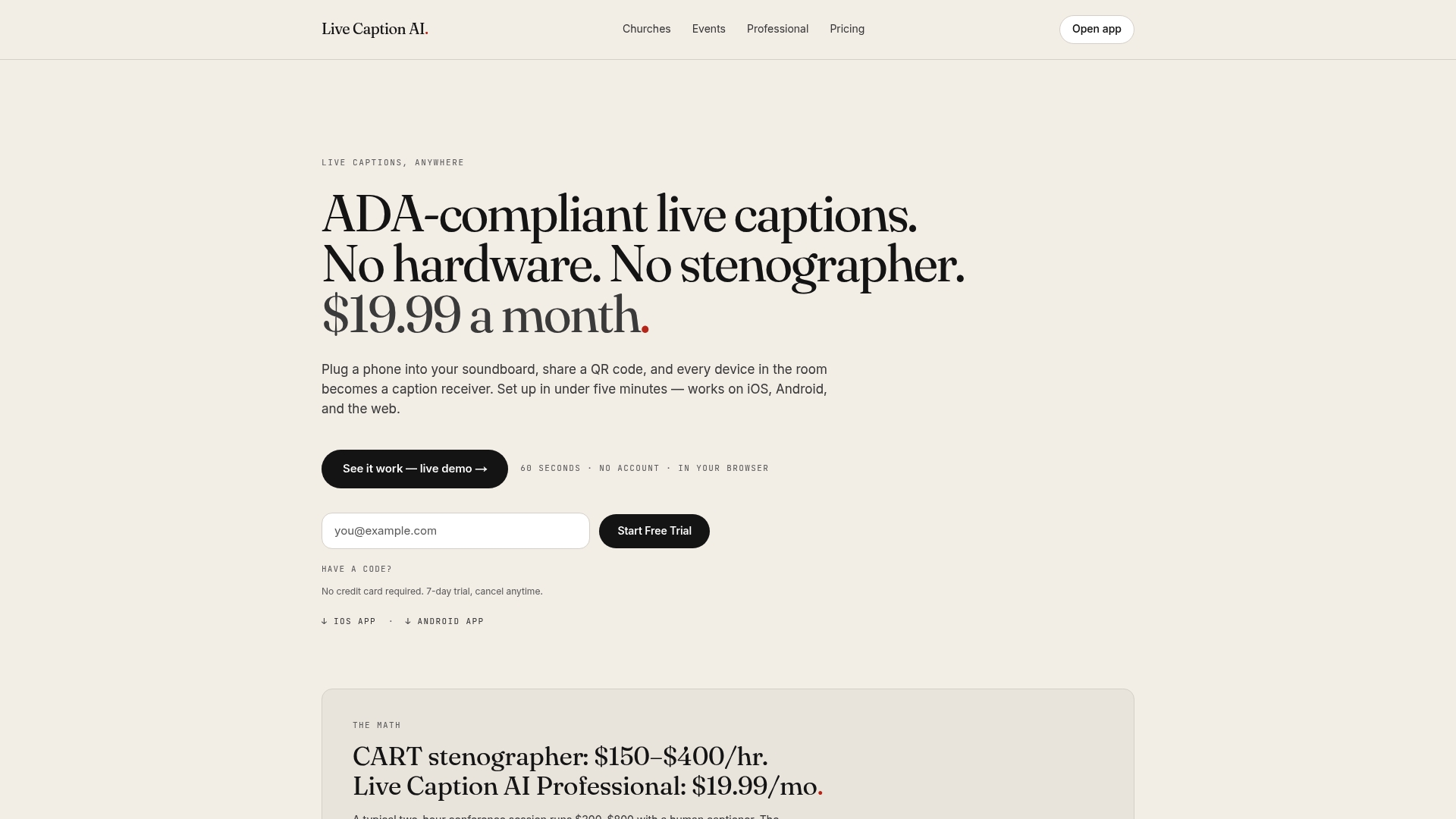
We built Live Caption AI for organizers who need captions in every pocket without renting anything. It turns any phone into a caption receiver through a QR code.
- Medical, Worship & Ministry and Finance & Earnings vocabulary models, plus up to 100 Custom Terms
- Translation into one of 29 languages per session
- Exportable transcripts and summaries
- Best for breakouts, supplemental captioning and effective-communication support, not a replacement for certified interpreters on high-stakes legal or medical content
See plans and pricing or the Professional plan.
FAQ
How many interpreters does a simultaneous session need?
Plan on two interpreters per language. They alternate because simultaneous interpreting is tiring, and ITU guidance on virtual interpreting recommends rotating every 15–20 minutes.
Are AI captions enough for a conference?
They can be enough for low-risk sessions and as a supplement to human interpreters. For accessibility obligations, WCAG notes that raw AI output often needs human intervention to reach an effective quality level. Choose humans for high-stakes content.
Is RSI better than on-site interpreting for hybrid events?
Often, yes. RSI removes booths and receivers, and attendees pick channels on their own devices. It does require clean audio and video feeds and a platform built for language channels.
How do I protect privacy during live captioning?
Use unique, secure session links and encrypt transcribed text, as ITU technical guidance advises for sensitive sessions. Ask vendors what they store after the session ends.
Do I still need sign-language interpreters if I offer captions?
Often you do. Sign language is a separate accessibility need, and many deaf attendees prefer a signing interpreter to text. Offer both when your budget allows.
Sources
- W3
- GUIDELINES FOR DISTANCE INTERPRETING Version 1, 09-01-2019 Introduction
- Technical Report ITU FGMV-17 on “Guidelines and requirements on interpreting in the metaverse” (approved)