September 4, 2026 · 11 min read
ADA Effective Communication: US Toolkit for Orgs, Plus Live Caption AI
Operational U.S. guidance for businesses, agencies, and clinics on meeting ADA effective communication, plus when Live Caption AI helps.
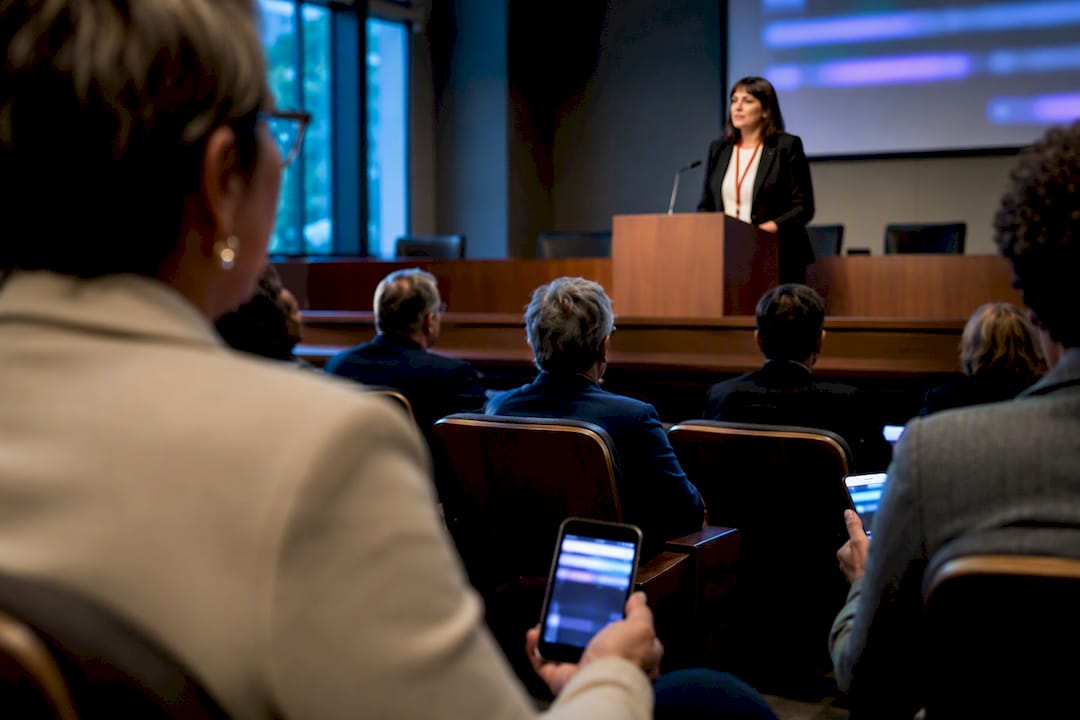
Covered entities under Title II and Title III of the ADA must make sure people with vision, hearing, or speech disabilities can communicate as effectively as anyone else. That means providing appropriate auxiliary aids and services, giving primary consideration to the person’s preferred method, and offering an alternative when a specific request creates an undue burden or would fundamentally alter the service. Skipping this obligation isn’t a gray area. It’s a compliance failure.
TL;DR:
- Providing auxiliary aids depends on the nature and complexity of the interaction, with more involved situations requiring qualified interpreters or captioning.
- Entities must follow the individual’s preferred communication method unless there is a documented undue burden or fundamental alteration, with exceptions being narrowly applied.
- All aids provided must be timely, accessible, and confidential, especially in sensitive settings like medical or legal contexts.
- Private entities cannot charge individuals for auxiliary aids, and “effective as” communication requires genuine understanding, not just offering some accommodation.
- Regular staff training, proper vendor vetting, and documented processes are essential to ensure actual compliance and exceptional communication access.
Table of Contents
- What ADA Effective Communication Actually Requires
- Auxiliary Aids and Services: Matching the Tool to the Situation
- How to Choose the Right Aid: Primary Consideration in Practice
- Undue Burden and Fundamental Alteration: The Narrow Exceptions
- Making Effective Communication Routine: Training and Operations
- Where Real-Time Captioning Fits Into the Compliance Picture
- Why Accessibility Planning Protects More Than Compliance
- How Live Caption AI Fits Into Your Accessibility Toolkit
- Where to Go for the Official Rules
- Sources
What ADA Effective Communication Actually Requires
The rule applies broadly. Title II covers state and local government agencies, from city clerks’ offices to public hospitals. Title III covers private businesses and nonprofits that serve the public, including clinics, law firms, retail stores, and event venues. Both must ensure that communication with people who have vision, hearing, or speech disabilities works as well as communication with anyone else, according to Ada.
The obligation extends past the person with the disability. Companions, such as a deaf parent accompanying a hearing child to a pediatrician’s visit, are entitled to the same access. Entities cannot charge a surcharge to recover the cost of an interpreter or captioning service, no matter how expensive the accommodation turns out to be.
The duty gets triggered the moment communication needs to happen, not just when someone files a formal request. A patient checking in at a front desk, a resident testifying at a city council meeting, and a customer negotiating a loan agreement all fall under the same standard. What varies is the complexity of the exchange, and that complexity drives what kind of aid actually satisfies the requirement.
A few things to keep straight from the start:
- Covered entities include both government agencies (Title II) and private businesses open to the public (Title III).
- The standard is “as effective as,” not merely “some accommodation was offered.”
- Companions with communication disabilities have the same rights as the primary visitor or patient.
- No cost for auxiliary aids may be passed on to the individual requesting them.
Auxiliary Aids and Services: Matching the Tool to the Situation
Auxiliary aids aren’t one-size-fits-all, and the DOJ’s guidance is explicit that the right choice depends on the person’s normal communication method and the nature, length, and complexity of the interaction, per ADA.gov’s guidance on communicating effectively. A five-minute prescription pickup calls for something very different than a two-hour deposition.
Here’s how the common aids break down by situation:
- Brief transactions (retail checkout, quick front-desk questions): written notes, a notepad, or a phone-based text exchange often work fine.
- Medical appointments (diagnosis discussions, informed consent, mental health intake): qualified sign language interpreters, either in person or through video remote interpreting (VRI), are usually necessary.
- Public meetings and hearings (city council sessions, school board votes): CART (Communication Access Realtime Translation) or live captioning lets attendees follow real-time proceedings.
- Phone-based interactions: entities must accept calls through telecommunications relay services (TRS) or video relay services (VRS) the same way they’d accept any other call, according to the ADATA effective communication factsheet.
- Printed materials and forms: accessible electronic documents, large print, or Braille versions depending on what the individual needs.
- Extended or highly technical exchanges: notetakers or assistive listening systems in addition to interpreters.
Pro Tip: VRI works well for unplanned situations like an emergency room intake, but it tends to break down when a patient is in pain, needs to move between rooms, or has limited mobility to position a screen. Know when to escalate to an on-site interpreter.
Every aid provided has to arrive in a timely manner and in a format the person can actually use. Privacy matters too. Captioned text or interpreted conversations involving medical or legal details deserve the same confidentiality as a whispered consultation.
How to Choose the Right Aid: Primary Consideration in Practice
The law doesn’t let a business simply pick whatever’s cheapest or easiest. Public entities under Title II are required to give primary consideration to the individual’s expressed choice of aid, honoring that preference unless there’s a legitimate reason not to. Private entities under Title III have more flexibility but still need to consult the person and confirm the chosen method actually works for them.
A workable decision process looks like this:
- Ask directly what communication method the person prefers, rather than guessing.
- Weigh the nature, length, and complexity of what’s about to be discussed.
- Confirm the aid you’re offering will genuinely allow effective back-and-forth, not just a token gesture.
- Document what was requested, what was provided, and why, especially if you deviated from the person’s first choice.
- Build in a process for reasonable notice, since scheduled appointments allow time to book an interpreter, while walk-ins require a faster fallback like VRI or a captioning app.
Pro Tip: If a patient or visitor requests a specific interpreter or a particular captioning format, write it into the record even when you can’t accommodate it immediately. That documentation protects your organization and creates a paper trail showing good-faith effort.
Privacy protections apply throughout this process. A person’s disclosure of a hearing loss, a stutter, or a communication disorder shouldn’t circulate beyond the staff directly involved in arranging the accommodation.
Undue Burden and Fundamental Alteration: The Narrow Exceptions
Entities aren’t required to provide a specific aid if it would cause undue financial or administrative burden, or if it would fundamentally alter the nature of the goods or services offered. These exceptions are narrow by design, and they don’t erase the underlying duty.
A few ground rules apply:
- Undue burden is judged against the entity’s overall resources, not just the budget of one department or event.
- For Title II entities, a high-level official must issue a written statement explaining why a specific aid creates undue burden, a step meant to prevent front-line staff from denying requests on their own judgment, per ADA.gov.
- Even when the specific aid requested is off the table, the entity still has to provide an alternative that gets the job done, whether that’s a different interpreter service, a captioning app instead of CART, or written materials instead of a live reader.
- Every claim of undue burden should be documented: what was requested, what alternative was offered, and who signed off on the decision.
If a request genuinely can’t be met, the fallback is never silence. It’s a different aid that still gets communication across the finish line.
Making Effective Communication Routine: Training and Operations
Written policy means little if the front desk doesn’t know what to do when someone walks in signing instead of speaking. Real compliance lives in daily operations, not the employee handbook.
- Train staff on intake procedures. Teach receptionists, nurses, and clerks how to recognize a communication request and who to call, whether that’s an interpreter agency or a captioning tool already set up on-site.
- Ban the “just use a family member” shortcut. Companions and relatives should never be treated as default interpreters, particularly in medical or legal contexts where accuracy and neutrality matter, a point the ADATA factsheet makes directly.
- Write reasonable-notice procedures into policy. Scheduled visits get advance interpreter booking; walk-ins get a documented fallback method.
- Vet vendors before you need them in a crisis. Check device compatibility, turnaround time, and privacy handling well before the first real request comes in.
Pro Tip: Run a test session with your captioning or interpreting vendor on your own sample content, not a generic demo, before rolling it out to real patients or attendees. Accuracy on your specific terminology matters more than a polished sales demo.
Where Real-Time Captioning Fits Into the Compliance Picture
Captioning works well for one-to-many situations: public meetings, worship services, lectures, and events where a large audience needs to follow spoken content in real time. It’s a weaker fit for private, sensitive one-on-one exchanges like a therapy session or a legal consultation, where a qualified interpreter who can read tone, ask clarifying questions, and sign back and forth is often the more effective aid.
Live Caption AI is one option worth understanding in this space. It turns a QR code into a caption receiver on any attendee’s phone, no app download or dedicated hardware required. The service supports multiple languages, translating from one source language to one target language per session rather than broadcasting several translations simultaneously. Transcripts export as TXT, SRT, JSON, or PDF, and audio is never stored. Only the account owner can access saved transcripts.
Before deploying any captioning tool at scale:
- Run a live accuracy test on your own audio, not a canned demo.
- Confirm attendee devices and venue screens actually display captions the way you expect.
- Collect quick feedback from real users after the first session, not just internally.
- Check that privacy handling for the recorded or exported transcript matches your setting’s sensitivity.
More technical breakdowns of how captioning technology handles these scenarios are covered in this roundup of assistive captioning technology.
Why Accessibility Planning Protects More Than Compliance
Communication access isn’t a checkbox you clear once and forget. It’s a service quality issue that shows up every time a patient can’t follow their diagnosis or a resident can’t understand a zoning vote. Layered planning, meaning policy plus training plus the right technology mix, catches the gaps that any single fix misses. Organizations that treat this as ongoing operational work, not a one-time fix, tend to avoid both complaints and the scramble that follows one.
— Ryan
How Live Caption AI Fits Into Your Accessibility Toolkit
If your organization is weighing options for real-time captioning as part of a broader accessibility plan, Live Caption AI gives you a low-cost way to widen access without buying dedicated hardware or booking a stenographer for every event.
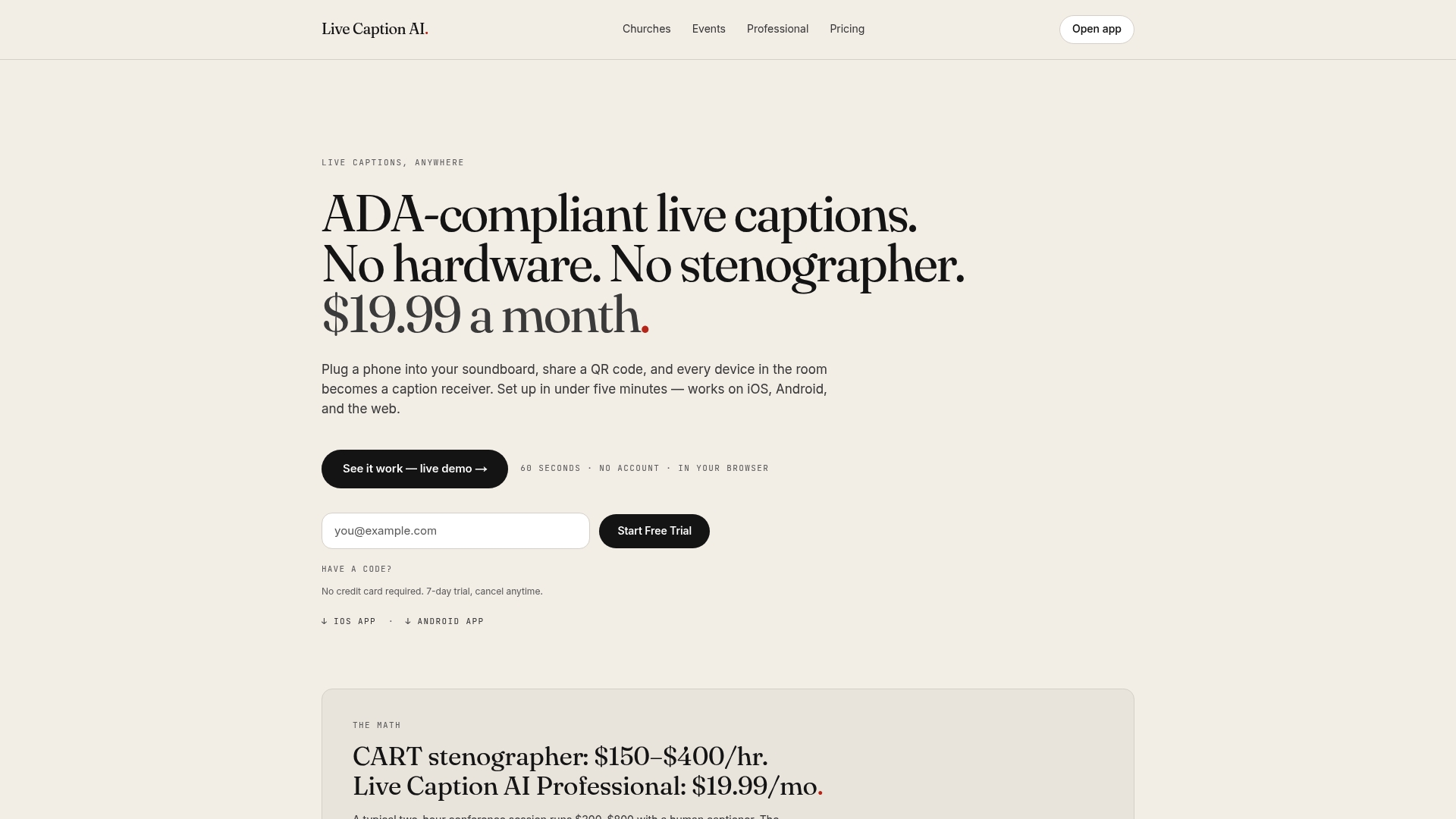
Attendees scan a QR code and captions appear on their own phone, in one of 29 supported languages, translated from a single source language to a single target language per session. Sessions export as TXT, SRT, JSON, or PDF for recordkeeping, and audio is never stored, so transcripts stay accessible only to the account owner.
Live Caption AI is not a substitute for a qualified sign language interpreter or a certified CART writer when the law or the individual’s preference calls for one, and using it doesn’t make a venue ADA compliant on its own. It’s one tool that widens access, particularly for one-to-many settings like church services, conferences, and public presentations. If you want to see how it performs on your own content, try the free demo before committing to a Professional subscription plan.
Where to Go for the Official Rules
The guidance in this article summarizes federal requirements, but the underlying legal text and technical assistance materials live with the agencies that wrote them.
- ADA Requirements: Effective Communication, the Department of Justice’s primary compliance guidance.
- Communicating Effectively with People with Disabilities, DOJ’s breakdown of auxiliary aids, undue burden, and fundamental alteration.
- Effective Communication factsheet from the ADA National Network, useful for plain-language explanations and training material.
For situations that don’t have a clean answer, such as a disputed undue burden claim or a complex multi-disability accommodation, consult the DOJ’s technical assistance line or a regional ADA National Network center rather than guessing. Complex cases also benefit from a broader consideration of web accessibility standards when the communication in question involves digital documents or online forms.