July 18, 2026 · 8 min read
Live Captioning for Events: Your 2026 Planning Guide
Discover the benefits of live captioning for events in 2026. Enhance accessibility, comply with regulations, and engage your audience effectively.
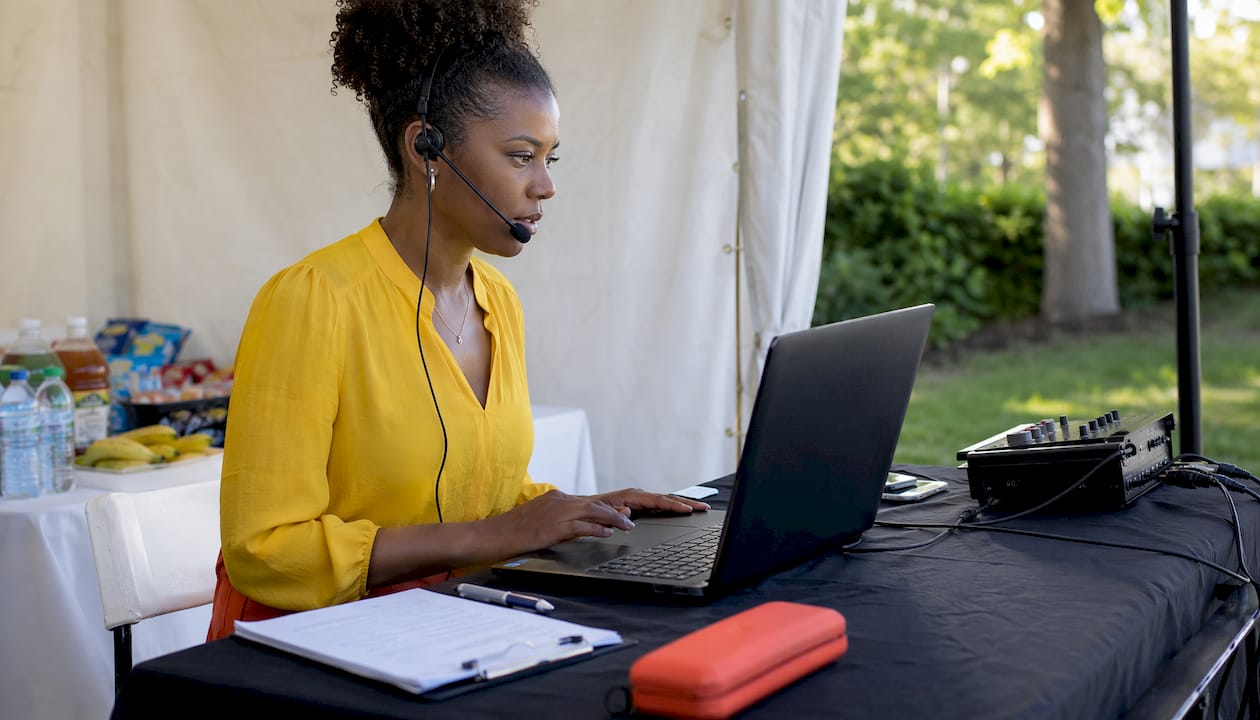
Live captioning for events converts spoken words into real-time text displayed on screens, personal devices, or livestream overlays so every attendee can follow along. No hardware. No guesswork. Just words on screen, as they happen. For attendees with hearing loss, non-native speakers, or anyone in a noisy room, real-time captions are the difference between participating and being left out.
Here is why event organizers are prioritizing captions now:
-
Accessibility: Captions give attendees with hearing disabilities full access to spoken content.
-
Legal compliance: ADA requirements apply to many public events, making captions a legal obligation in several contexts.
-
Wider reach: Non-native English speakers and second-language listeners follow content more easily with text support.
-
Engagement: Attendees retain more when they can read along with what they hear.
-
Record keeping: Many captioning platforms export transcripts automatically after the event.
Auto-generated vs. professional captioning: which one fits your event?
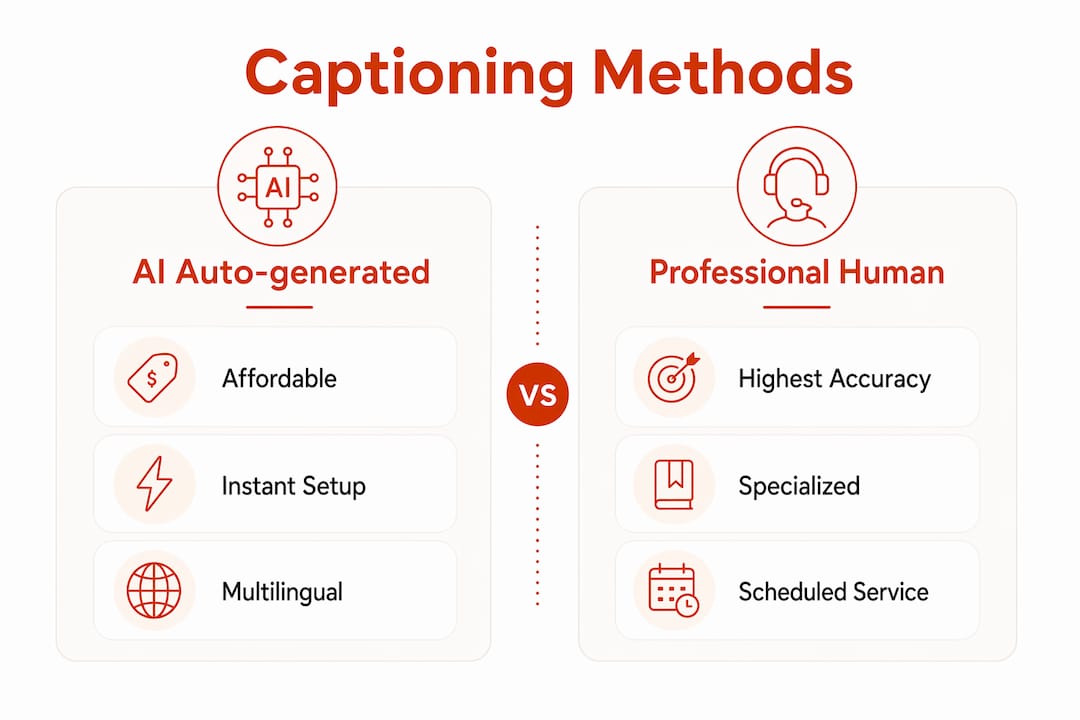
Two main approaches exist for delivering live captions at events, and the right choice depends on your budget, event type, and accuracy requirements.
Auto-generated AI captions use speech-to-text software to transcribe audio in real time. They are affordable, available instantly, and require no advance scheduling. The tradeoff: accuracy with specialized speech can drop when speakers use heavy accents, technical jargon, or fast delivery. Modern AI platforms have closed this gap considerably, with leading services maintaining over 90% accuracy in most languages and offering instant auto-correction during live sessions.
Professional human captioners (often called CART providers, for Communication Access Realtime Translation) offer the highest accuracy, especially for medical, legal, or highly technical content. They cost significantly more and require advance booking, sometimes weeks out.

| Feature | AI auto-generated | Professional human |
|---|---|---|
| Accuracy | High accuracy in most languages | Highest, especially for jargon |
| Latency | Near-instantaneous or immediate | Varies by operator |
| Cost | Low to moderate | High |
| Availability | Immediate | Requires advance scheduling |
| Multilingual support | Up to 116 languages | Limited by operator skill |
| Best for | Most events, webinars, hybrid | Legal, medical, high-stakes |
Pros of AI captions: low cost, instant setup, multilingual output, no scheduling lead time. Cons of AI captions: occasional errors with accented or highly technical speech. Pros of professional captioning: near-perfect accuracy, handles complex terminology well. Cons of professional captioning: expensive, requires early coordination, limited language options.
When are live captions legally required in the US?
The Americans with Disabilities Act requires effective communication for people with disabilities at public events. For many event types, that means live captions are not optional. Section 508 of the Rehabilitation Act extends similar requirements to federal agencies and federally funded programs, covering conferences, training sessions, and public meetings.
-
Legally required contexts: public government meetings, federally funded events, university and college events, and any event where a person with a hearing disability requests accommodation.
-
Strongly recommended contexts: corporate conferences, trade shows, webinars, religious services, and community events open to the public.
-
Best practice beyond the minimum: offer captions proactively, not only when requested. Harvard’s accessibility guidance recommends building captions into event planning from the start rather than treating them as an add-on.
Waiting for a formal accommodation request puts you behind. Proactive captioning signals genuine inclusion and protects you from last-minute compliance scrambles.
Practical setup: what you need to run live captions at your event
Clean audio is the single biggest factor in caption quality. A direct feed from your mixing board into the captioning system beats a room microphone every time. Lapel mics for speakers, a reliable internet connection, and a tested audio routing path are the foundation.
From there, captions can appear on:
-
Stage screens or monitors visible to the full room
-
Personal smartphones via a shared QR code, so each attendee reads captions on their own device
-
Livestream overlays for virtual or hybrid audiences
-
Dedicated caption displays positioned near the stage for attendees who prefer a fixed screen
Pro Tip: Send your captioning vendor a glossary of event-specific terms, speaker names, and acronyms at least 48 hours before the event. AI platforms with domain-specific models can load this vocabulary and dramatically reduce errors on technical content.
Plan your captioning timeline with enough lead time for vendor coordination, equipment testing, and a dry run. For professional CART services, four to six weeks is a safe minimum. AI-based platforms can often be activated same-day, but testing still matters.
What does live event captioning cost in the US?
Pricing varies widely based on the service model you choose. Professional CART providers typically charge by the hour, and rates for in-person events can run well into the hundreds of dollars per session. AI-powered platforms use subscription models that bring that cost down sharply.
Key cost drivers to budget for:
-
Event duration: longer events cost more under hourly pricing models.
-
Number of viewers: some platforms charge per seat; others offer unlimited device broadcasting at a flat rate.
-
Multilingual support: real-time translation into multiple languages adds cost with some vendors.
-
Specialized terminology: domain-specific AI models may be a premium feature.
-
Transcript exports and post-event access: not always included in base pricing.
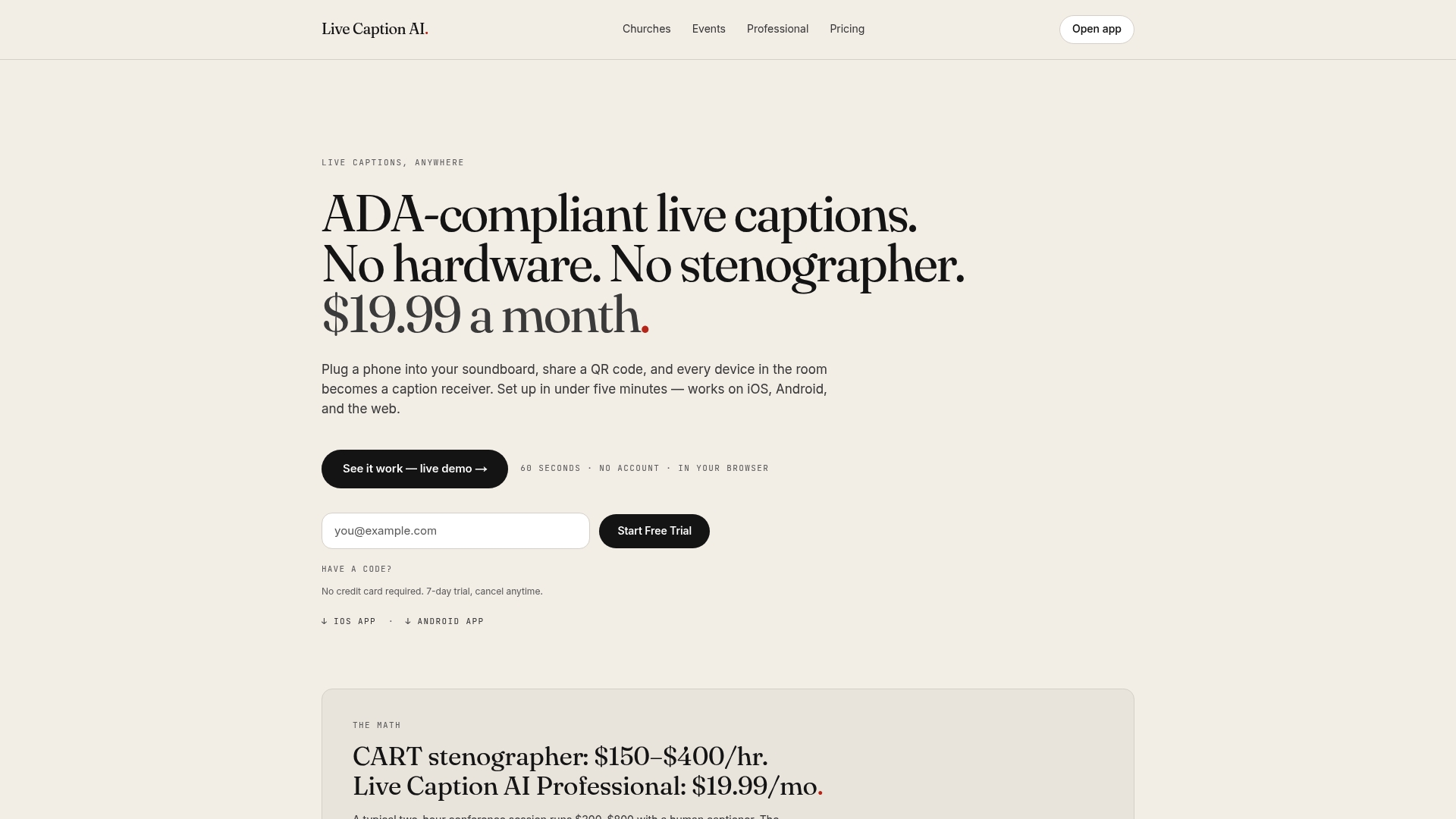
Live Caption AI’s subscription plans start at $19.99 per month, covering sessions that would otherwise require hundreds of dollars in stenographer fees. For event organizers running recurring programs, a monthly subscription delivers far better value than per-session CART billing.
How AI is changing live captioning accuracy and reach
AI captioning has moved well past basic speech-to-text. Leading platforms now support 80 to 116 languages for real-time translation, broadcast to unlimited devices simultaneously, and apply instant auto-correction so errors disappear before most attendees notice them.
Benefits for event organizers adopting modern AI captioning:
-
Captions reach every attendee’s device without extra hardware or technician setup.
-
Domain-specific models handle medical, financial, and technical vocabulary that generic speech-to-text misses.
-
Multilingual output lets a single captioning session serve audiences speaking different languages at once.
-
Exportable transcripts create an accessible record of the event automatically.
Integrating live captions across in-person, virtual, and hybrid formats
Each event format has a different integration path. For in-person events, connect your audio feed directly to the captioning platform and display output on stage screens or via QR code on attendee phones. For virtual events and webinars, most AI captioning platforms integrate with Zoom, Microsoft Teams, and similar tools through browser-based overlays or direct API connections. For hybrid events, you need both: a clean room audio feed for in-person attendees and a simultaneous stream output for remote viewers. Test both paths independently before the event goes live.

How to evaluate and choose a captioning vendor
Start with accuracy. Ask vendors for a live demo using content similar to your event, including any technical terminology your speakers will use. Then ask these questions:
-
What is your average accuracy rate, and how do you handle specialized vocabulary?
-
How does your platform deliver captions to attendees (screen, QR code, overlay)?
-
What languages do you support for real-time translation?
-
What is your process if the connection drops mid-event?
-
Do you provide transcripts after the session?
Red flags: vendors who cannot demonstrate accuracy on a live test, platforms with no fallback plan for connectivity issues, and services that charge extra for basic transcript exports. Avoid any vendor who cannot explain how their system handles accented speech or fast-paced delivery.
How live captions improve attendee experience and engagement
Captions do more than serve attendees with hearing loss. Second-language listeners follow technical content more easily when they can read along. Attendees in noisy environments stay connected. People who process information better visually retain more from captioned sessions. Providing live captions signals to every attendee that the event was designed with them in mind, and that perception shapes how they rate the overall experience.
Events with captions consistently report higher satisfaction scores, broader audience reach, and stronger post-event engagement with recorded content. The transcript itself becomes a resource: shareable, searchable, and accessible long after the event ends.
Live captioning for events is most effective when you choose the right method for your format, plan your audio setup carefully, and give your vendor enough lead time to prepare.
| Point | Details |
|---|---|
| Choose the right method | AI captions suit most events; professional CART is best for high-stakes or highly technical sessions. |
| Clean audio is foundational | A direct board feed beats room microphones and is the single biggest factor in caption accuracy. |
| Plan ahead | CART vendors need four to six weeks; AI platforms can deploy faster but still require testing. |
| AI supports a broad range of languages for real-time translation | Modern platforms deliver real-time translation to unlimited devices simultaneously. |
| Proactive captions beat reactive ones | Building captions into your event plan from the start avoids last-minute compliance issues. |
Share a QR code. Done.